Accessible and Inclusive University Classrooms
My research focuses on the intersection between pedagogical practices, accessibility, and inclusion.
I supervise community-led student initiatives aimed at understanding the experiences of and improving support for 2SLGBTQIA+, disabled, neurodivergent, and racialized students within the Department of Psychology.
Ongoing Projects
We are actively recruiting participants!
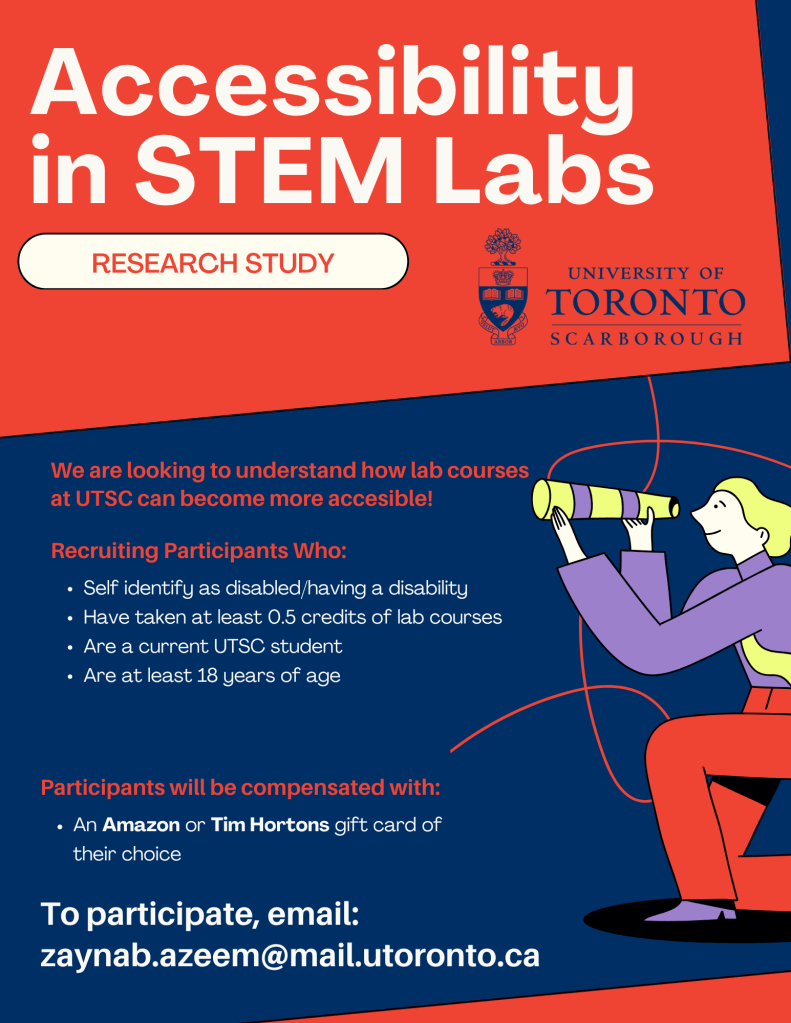
Laboratory Learning for All: Evaluating Accessibility in Undergraduate STEM Lab Environments (2025-2026; Zaynab Azeem, PSYC90 Supervised Study in Psychology)
Past Projects
Godhwani, K., Simanjuntak, P., & Bercovici, D. (2025). Barriers to access:
Exploring student experiences with accessibility services at UTSC (Quality
Improvement Project Report). University of Toronto Scarborough. (I.D.E.A.S. Funded Project)
Empowering Student Activists: A Differentiated Approach to Institutional Support (2024-2025; Shahtaj Dheda, PSYC93 Supervised Study in Psychology).
Knowledge Production And The Case of Autistic Undergraduate Students: Contesting What We Are Taught in Psychology Courses About Ourselves (2023-2024; Stephanie Li, PSYC90 Supervised Study in Psychology).
Neurodiversity in University: A Mixed Method Study on Student Experiences and Disability Identity (2023-2024; Brianna Wedderburn, PSYD98 Thesis in Psychology).
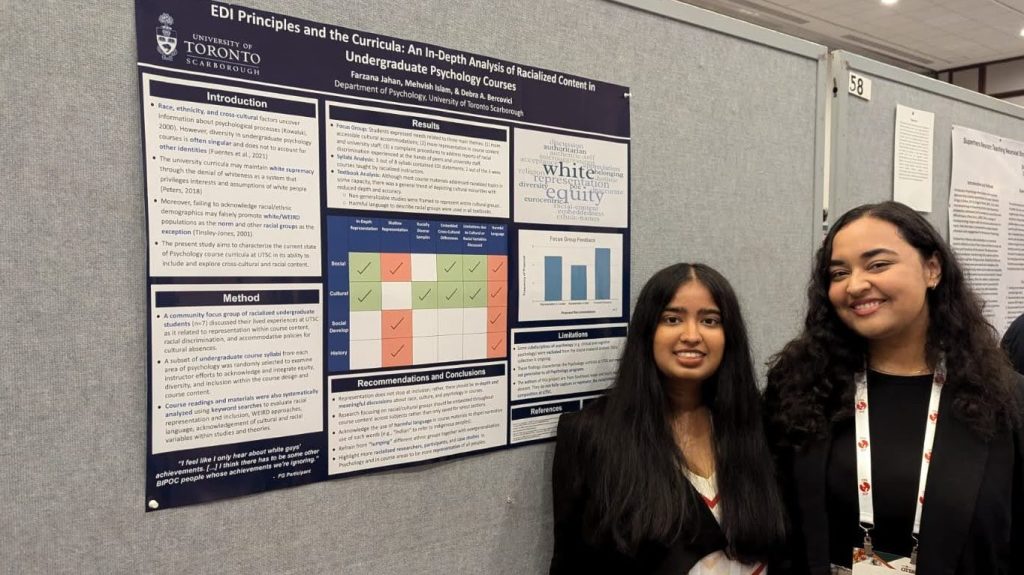
EDI Principles and the Curricula: An In-Depth Analysis of Racialized Content in Undergraduate Psychology Courses (2023-2024; Farzana Jahan & Mehvish Islam, Work-Study Project in Psychology; Pedagogies of Inclusive Excellence Funded project).
A collaborative reimagining of a neurodivergent-inclusive psychology and neuroscience classroom (2022-2024; Stephanie Li & Maria Khandaker, Pedagogies of Inclusive Excellence Funded project).
Inclusion of Gender Diversity at UTSC Psychology (2022-2023; Stephanie Li, Pedagogies of Inclusive Excellence Funded project).

Neural Circuits and Executive Functioning
I completed my PhD at the University of British Columbia in Dr. Stan Floresco’s Lab. I conducted research in behavioural neuroscience, working with rodent models to study how prefrontal and subcortical circuits support executive functioning. I used optogenetics and pharmacological techniques to investigate how the timing of neural firing in these brain regions contributes to behavioural flexibility and decision-making.
Selected Publications
Jenni, N. L., Bercovici, D. A., & Floresco, S. B. (2025). Medial orbitofrontal, prefrontal and amygdalar circuits support dissociable component processes of risk/reward decision making. JNeuro, e2147242025; https://doi.org/10.1523/JNEUROSCI.2147-24.2025
Bercovici, D. A., Bramesfeld, K. D., & Dere, J. (2025). Reflections on our departmental journey to collective equity, diversity, and inclusion action. In Creating a Faculty Activism Commons for Social Justice (pp. 98-112). Routledge. https://doi.org/10.4324/9781032700069
Bercovici, D. A., Princz-Lebel, O., Schumacher, J. D., Lo, V. M., & Floresco, S. B. (2023). Temporal Dynamics Underlying Prelimbic Prefrontal Cortical Regulation of Action Selection and Outcome Evaluation during Risk/Reward Decision-Making. JNeuro, 43(7), 1238–1255. https://doi.org/10.1523/JNEUROSCI.0802-22.2022.
Bercovici, D. A., Princz-Lebel, O., Tse, M. T., Moorman, D. E., & Floresco, S. B. (2018). Optogenetic Dissection of Temporal Dynamics of Amygdala-Striatal Interplay during Risk/Reward Decision Making. eNeuro, 5(6), ENEURO.0422-18.2018. https://doi.org/10.1523/ENEURO.0422-18.2018.
Selected Conference Presentations
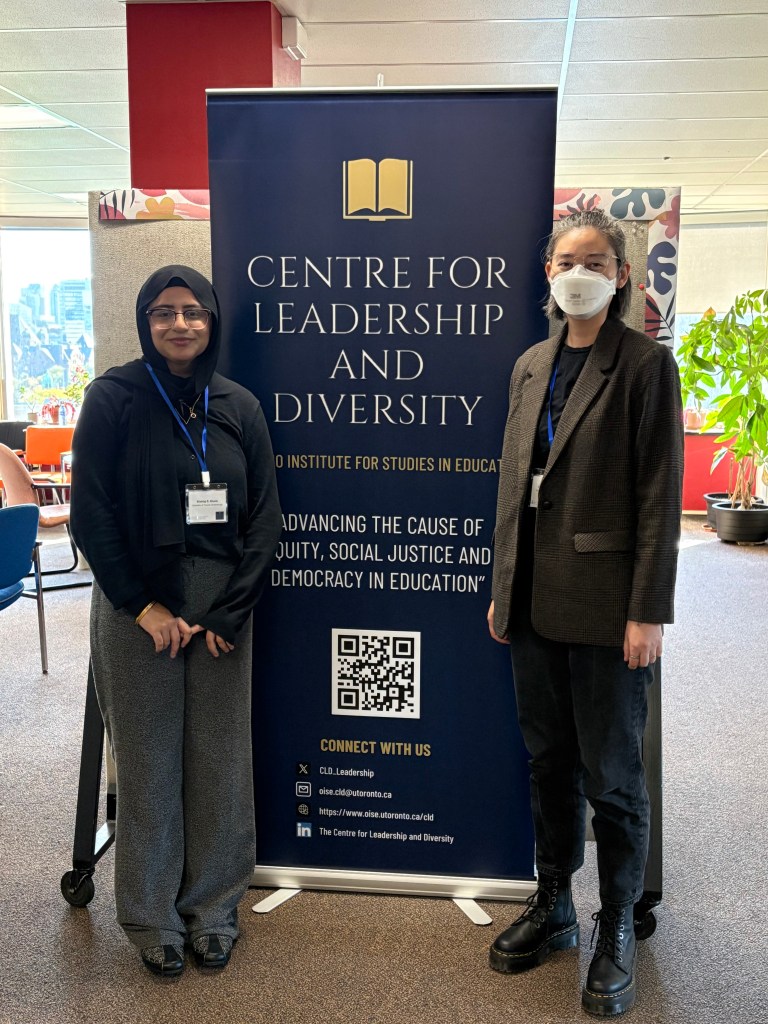
Dheda, S. & Bercovici, D. A. Investigating the Effect of Political Value Discrepancy on the Student-Institution Relationship: A Study of Student Activists at the University of Toronto (2025). Centre for Leadership and Diversity 6th Annual International Conference, Toronto, ON, Canada, Symposium Talk
Jahan, F., Islam, M., & Bercovici, D. A. EDI Principles and the Curricula: An In-Depth Analysis of Racialized Content in Undergraduate Psychology Courses (2024). Canadian Psychological Association, Ottawa, ON, Canada, Poster Presentation.
Bercovici, D. A. & Danielson, D. K. A Collaborative Imagining of an Inclusive Psychology Department (2023). University of Toronto Teaching & Learning Symposium, Toronto, ON, Canada, Symposium Talk
Lo, V. M., Bercovici, D. A., & Floresco, S.B. Optogenetic and pharmacological investigation of prelimbic cortex involvement in strategy set-shifting (2020). Society for Neuroscience Global Connectome, Virtual Conference Presentation
Bercovici, D. A., Princz-Lebel, O., Lo, V. M., & Floresco, S. B. Optogenetic suppression of medial prefrontal cortical activity during action selection and action outcomes differentially biases risky choice (2020). International Society for Behavioural Neuroscience, Poster Presentation, Travel Award Winner (conference cancelled due to COVID-19)
Bercovici, D. A., Princz-Lebel, O., & Floresco, S. B. Optogenetic suppression of medial prefrontal cortical activity during action selection and action outcomes differentially biases risky choice (2018). Society for Neuroscience, Poster Presentation
Bercovici, D. A., Princz-Lebel, O., & Floresco, S. B. Optogenetic suppression of medial prefrontal cortical activity during action selection and action outcomes differentially biases risky choice (2018). Canadian Association for Neuroscience, Poster Presentation
Bercovici, D. A., Princz-Lebel, O., Tse, M. T., Moorman, D. E., & Floresco, S. B. Optogenetic dissection of temporal dynamics of amygdala-striatal interplay during risk/reward decision making (2017). Society for Neuroscience, Poster Presentation
Bercovici, D. A., Princz-Lebel, O., Tse, M. T., Moorman, D. E., & Floresco, S. B. Optogenetic dissection of temporal dynamics of amygdala-striatal interplay during risk/reward decision making (2017). Gordan Research Conference: Amygdala function in emotion, cognition and disease, Poster Presentation
Bercovici, D. A., Princz-Lebel, O., Tse, M. T., Moorman, D. E., & Floresco, S. B. Optogenetic dissection of temporal dynamics of amygdala-striatal interplay during risk/reward decision making (2017). Canadian Association for Neuroscience, Travel Award Winner, Poster Presentation
Bercovici, D. A., Floresco, S. B. Temporal dynamics of amygdala-ventral striatal interactions mediating risk/reward decision-making (2016). Society for Neuroscience, Symposium Talk
 Debra A. Bercovici, PhD